Nobody plans for a breakdown. One moment you are cruising along with the radio on, and the next you are dealing with a dashboard full of warning lights, a strange noise or an engine that simply quits. In a busy city like Orlando, with heavy traffic, theme park crowds and sudden summer storms, a breakdown can feel stressful and even frightening. The good news is that a calm, simple plan makes a big difference. This guide walks you through what to do when your car breaks down, from the first few seconds to the moment help arrives, so you can stay safe and get back on the road as quickly as possible. If you are ever stranded and need emergency car repair in Orlando, these steps will help.
Step One: Stay Calm and Think About Safety First
Your first priority is not the car. It is the people in it. Take a breath, keep your hands steady on the wheel and remember that most breakdowns can be handled safely if you stay calm. Do not slam the brakes. Ease off the accelerator, turn on your hazard lights right away and look for a safe place to go.
If you lose power steering or power brakes, the car will still steer and stop, but it may take more effort. Hold the wheel firmly, brake smoothly and steer toward a safe spot. Your owner’s manual explains how your specific vehicle behaves when the engine stops.
Step Two: Get Off the Road if You Can
The safest place for a disabled car is well away from moving traffic. If you can still roll, try to reach one of these:
- A parking lot, gas station or business driveway.
- A quiet side street.
- A wide, level shoulder with plenty of room.
- An exit ramp or a spot that gives you good visibility for other drivers.
Avoid stopping on a curve, at the crest of a hill or anywhere other drivers cannot see you until the last second. If you have to stop on a highway shoulder, pull as far to the right as you safely can, turn your wheels away from the road and keep your hazard lights on.
Step Three: Make Your Car Visible
Other drivers need to see you, especially in heavy rain, at night or in bright glare. Keep your hazard lights flashing. If you have reflective triangles, flares or a flashlight in your trunk, you can use them to warn approaching traffic, but only if it is safe to get out and do so. Never put yourself at risk to set up warning devices on a busy road.
Step Four: Decide Whether to Stay in the Car or Get Out
This depends on where you are. On a busy highway with fast traffic, many safety experts advise staying in the vehicle with your seat belt on while you call for help, unless there is a danger such as smoke, fire or the risk of being struck. If you do need to exit, leave through the side away from traffic and move well away from the road, behind a barrier if possible.
If you see smoke, flames or smell something burning, get everyone out right away, move well away from the car and call emergency services. Do not open the hood if you see smoke or fire, and do not try to put out a fire yourself.
Step Five: Call for Help
Once you are in a safe position, decide who to call. If anyone is injured, you are in immediate danger or the car is a hazard to traffic, call 911. For a non emergency breakdown, you have several options, such as roadside assistance through your insurance or an auto club, a tow service, or a mobile mechanic who can come to you and may be able to fix the problem on the spot.
When you call, be ready with the following:
- Your exact location, including the road, nearest cross street, mile marker or landmark.
- The make, model and color of your car.
- What happened and what symptoms you noticed, such as noises, smells, warning lights or steam.
- Whether you are in a safe spot and whether anyone needs medical help.
- Your phone number so they can reach you.
Keep your phone charged and consider keeping a car charger or a small power bank in the glove box.
Step Six: Figure Out What Might Have Happened
While you wait, it helps to note what the car was doing before it stopped. That information helps a technician diagnose the problem faster. Here are some common situations and what they might mean.
The car will not start
If the engine does not crank, cranks slowly or only clicks, the battery, connections or starter may be to blame. Our guide on the top 10 reasons your car won’t start explains the most common causes and what you can check safely.
The engine overheats
If the temperature gauge climbs into the hot zone, or you see steam, pull over safely and turn the engine off. Do not open the radiator or coolant cap while the engine is hot, because the system can be under pressure and very hot. Let the car cool down and check your owner’s manual before doing anything else.
The engine stalls while driving
A stall can come from a fuel problem, an electrical issue, a failing sensor or something else. If the car restarts, do not assume the problem is gone. Get it checked soon.
A flat tire or blowout
If a tire fails, grip the wheel firmly, ease off the accelerator and slow down gradually instead of braking hard. Steer to a safe spot. Changing a tire on a busy road can be dangerous, so if you are not in a safe place, call for help. Your owner’s manual explains how to use your spare and jack, if your car has them.
Warning lights
A flashing check engine light, an oil pressure light or a temperature warning is a signal to stop driving as soon as it is safe and have the car checked. Driving further can turn a small problem into a big one. Check your owner’s manual to learn what each light means for your car.
Strange noises, smells or vibrations
Grinding, knocking, burning smells or a violent shaking are all good reasons to stop and get help rather than keep driving.
Step Seven: While You Wait
Waiting for help in Central Florida can be uncomfortable, especially in summer. Keep these points in mind:
- Stay hydrated. Keep water in the car, especially during the hot months.
- Manage the heat. If it is safe, stay in the shade or in the car with the windows cracked. Never leave children or pets in a parked car, even for a short time.
- Stay alert. Keep your doors locked, and do not accept help from strangers if something feels off. Wait for a verified professional.
- Stay in touch. Let someone you trust know where you are and what is happening.
- Be careful with storms. If lightning is nearby, stay in the car, and never try to walk through flooded roads.
Build a Simple Emergency Kit
A few basic items can make a breakdown much easier to manage. Consider keeping these in your trunk:
- A phone charger or power bank.
- A flashlight with fresh batteries.
- Reflective triangles or flares.
- Bottled water and a few snacks.
- Jumper cables or a portable jump starter.
- A basic tool kit and work gloves.
- A tire pressure gauge and, if your car has one, a working spare and jack.
- A first aid kit.
- A rain poncho or light jacket.
- Your owner’s manual and your insurance information.
The Best Fix Is Prevention
Many breakdowns can be avoided. Batteries weaken, belts crack, hoses dry out and tires wear, and most of these problems give some warning before they leave you stranded. Regular maintenance and prompt attention to warning signs lower the odds of a roadside surprise. If you are not sure how often your car should be serviced, take a look at our post on how often you should get a car tune up, and check your owner’s manual for the schedule that fits your vehicle.
Habits that help include checking tire pressure regularly, keeping an eye on fluid levels, testing the battery before summer, paying attention to new noises and not ignoring warning lights. A few minutes now can save you hours on the side of the road later.
How a Mobile Mechanic Can Help After a Breakdown
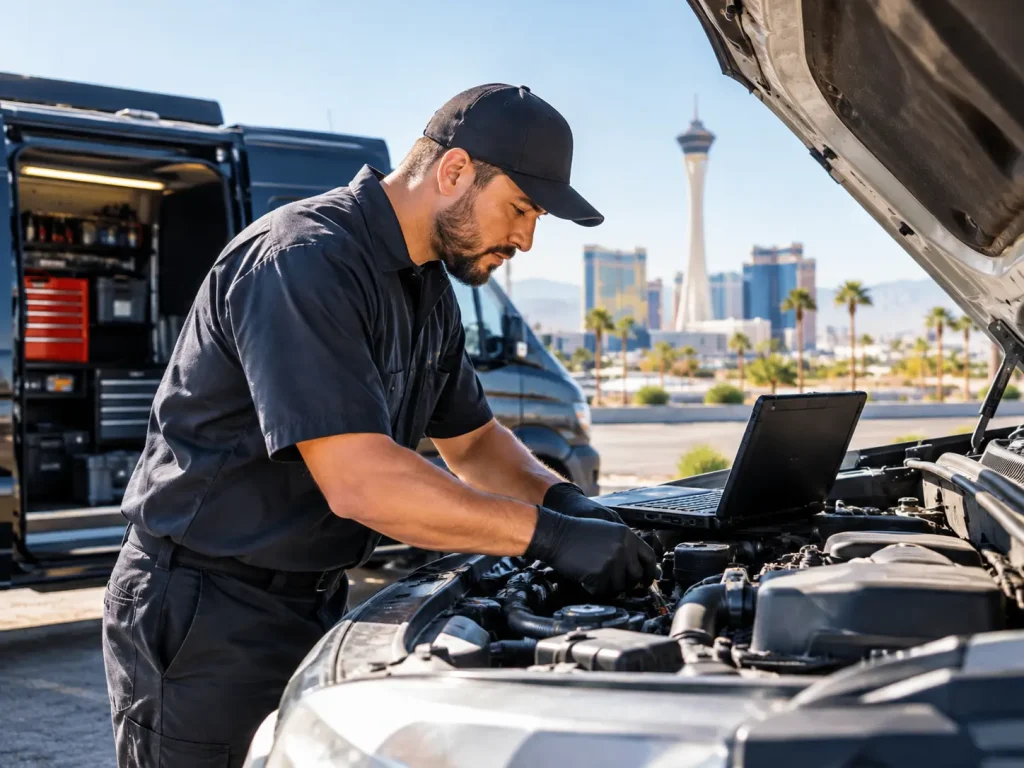
Many people assume a breakdown automatically means an expensive tow and days at a shop. Sometimes that is the case, but not always. A mobile mechanic can come to your location, diagnose the problem and, in many cases, fix it right there. Common roadside repairs can include battery testing and replacement, certain starter and charging system work, belts and hoses and more. If the issue is bigger, such as a major engine or transmission problem, the technician can tell you what is going on so you can make a smart decision about next steps. Some repairs may need a shop, and a good technician will be honest about what can be done on site.
Quick Recap: Your Breakdown Plan
- Stay calm and turn on your hazard lights.
- Get the car out of traffic if you can do so safely.
- Make the car visible to other drivers.
- Decide whether to stay in the car or move away from the road.
- Call 911 if there is danger, or call for roadside help.
- Note symptoms and share your exact location.
- Stay safe, cool and alert while you wait.
- Get the root cause checked and repaired.
A breakdown is never fun, but with a plan you can handle it safely and keep the stress down. If your car has left you stranded, or you want to prevent that from happening, visit our homepage to learn more, or contact us to get help.